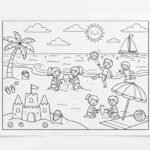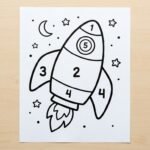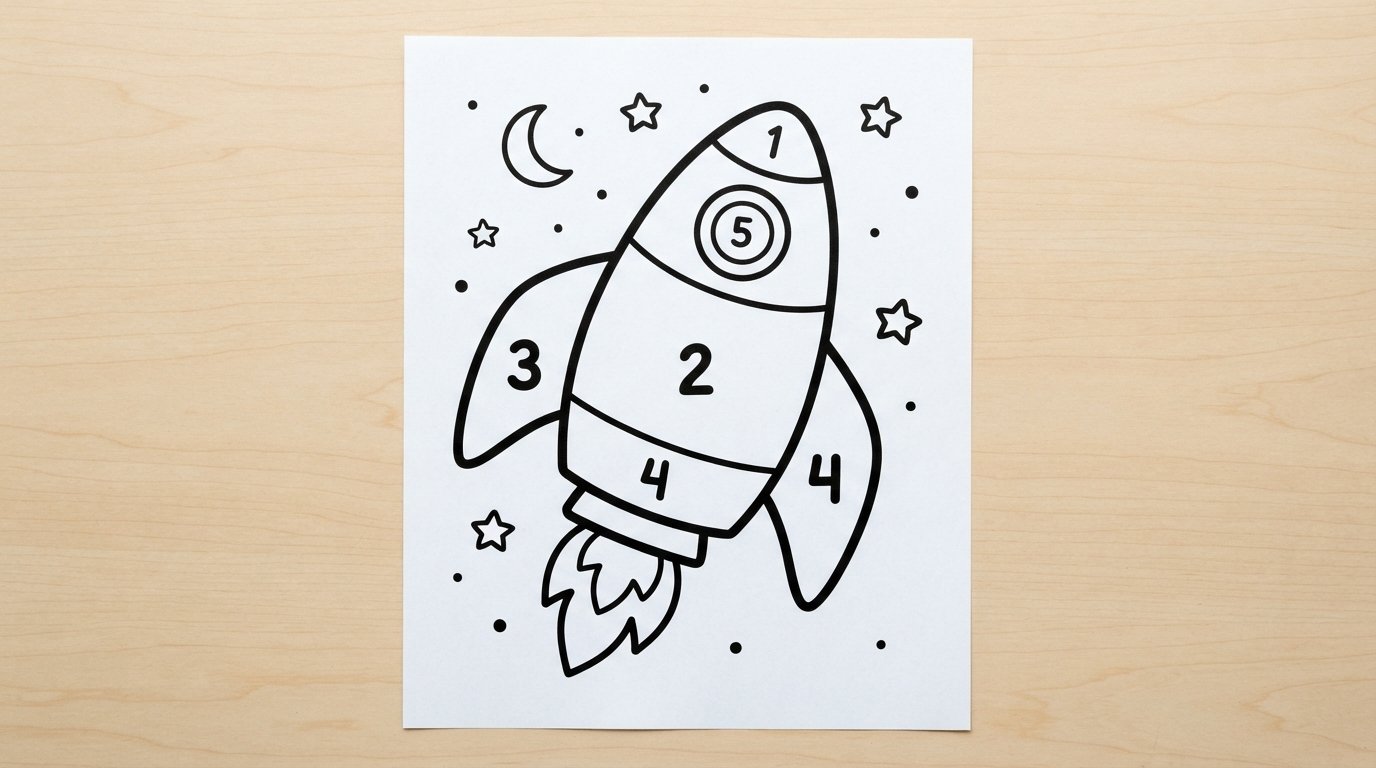

Learning activities do not always need to feel like traditional schoolwork. Sometimes a simple worksheet with numbers and colors can keep a young child interested while giving them an opportunity to practice following instructions.
Color by number activity worksheets for early learners combine basic number recognition with coloring. Each section of the picture contains a number, and the child uses a matching color to complete that section. As more spaces are colored, a hidden or partially completed picture gradually becomes visible.
These worksheets can be useful for preschoolers and early elementary learners at home, in classrooms, during quiet time, or as an additional activity after a lesson.
The key is choosing a worksheet that matches the child’s current ability. A page with three or four colors may be appropriate for a beginner, while a more detailed worksheet can give an older child a longer challenge.
What Is a Color by Number Worksheet?
A color by number worksheet contains a picture divided into different sections. Each section has a number representing a particular color.
For example:
1 = Red
2 = Blue
3 = Yellow
4 = Green
The child looks at the number inside each section and uses the corresponding color.
A simple picture might eventually reveal a:
- Flower
- Apple
- Butterfly
- Ball
- Animal
- House
- Tree
- Vehicle
- Sun
- Simple landscape
The child does not need to know what the completed picture will look like before starting.
Why Color by Number Activities Are Popular
Young children often enjoy the combination of a small puzzle and a coloring activity.
Instead of being told exactly what to draw, they follow a simple visual system.
For example, a child may see several sections marked with the number “2.” After learning that number 2 means blue, they can search for every section that needs blue.
This gives the worksheet a small sense of discovery.
It can also make a familiar coloring activity feel different because the child has a specific task to complete.
Start With Simple Number Recognition
For early learners, keep the first worksheets simple.
A beginner page might use only:
1, 2, and 3
For example:
1 = Red
2 = Yellow
3 = Green
This reduces the number of instructions the child needs to remember.
Once the child becomes comfortable with the format, you can introduce additional numbers and colors.
There is no need to begin with a complicated worksheet containing ten different colors.
Color by Number for Preschoolers
Preschool children can enjoy color-by-number worksheets when the design is large and easy to understand.
Look for:
- Large sections
- Clear numbers
- Thick outlines
- Three to five colors
- Familiar pictures
- Simple instructions
A large apple divided into several sections can be easier than a detailed landscape containing dozens of tiny spaces.
The goal is to let the child understand the activity without becoming frustrated by the page.
Number and Color Matching
A useful part of the activity is the connection between a number and a color.
The child might have a small key at the top of the page:
1 → Red
2 → Blue
3 → Yellow
4 → Green
Before beginning, ask the child to point to each number and identify its color.
You can then say:
“Can you find all the number 2 sections?”
This turns the worksheet into a small searching game.
Start With One Color at a Time
Some children find it easier to work with one color before moving to the next.
For example:
- Find all number 1 sections.
- Color them red.
- Find all number 2 sections.
- Color them blue.
- Continue with the remaining numbers.
This approach can make a busy worksheet feel more manageable.
It can also reduce the need for the child to constantly switch between several crayons.
Let Children Choose Their Coloring Tools
Different children prefer different materials.
Common options include:
- Crayons
- Colored pencils
- Washable markers
- Jumbo crayons
- Twistable crayons
Crayons are often convenient for younger children because they cover larger spaces quickly.
Colored pencils can be useful for older children working with smaller sections.
Washable markers can produce bright results, but thicker paper may be useful because marker ink can show through ordinary printer paper.
Use supplies appropriate for the child’s age and supervise younger children as needed.
Color by Number With Familiar Pictures
Early learners often respond well to pictures they already recognize.
Good beginner subjects include:
Animals
- Cat
- Dog
- Fish
- Bird
- Butterfly
Food
- Apple
- Banana
- Ice cream
- Cupcake
- Watermelon
Nature
- Flower
- Tree
- Sun
- Cloud
- Rainbow
Everyday Objects
- Ball
- Car
- House
- Toy
- Backpack
Familiar objects can make the finished picture easier for children to identify.
Use Color by Number After a Lesson
A worksheet does not have to be the main activity.
Suppose a child has been practicing numbers 1–5. A color-by-number worksheet can provide a quiet follow-up activity.
You could say:
“Let’s see how many numbers you can find on this page.”
The child can then practice recognizing the numbers while coloring.
Similarly, after learning basic colors, the worksheet can reinforce the names of those colors.
Keep the activity relaxed rather than turning every page into a test.
Make Your Own Simple Color Key
If a worksheet does not include a color key, you can create one yourself.
For example, write at the top of the page:
1 = Blue
2 = Green
3 = Yellow
4 = Red
You can also draw a small colored circle beside each number.
This can make the instructions easier for a young child to understand.
If the child is still learning to recognize numbers, the visual color example can be particularly helpful.
Color by Number and Counting
You can add a simple counting activity after the worksheet is finished.
Ask:
- How many red sections did you color?
- How many blue sections are there?
- Which color appears the most?
- Which color appears the least?
The child can point to the sections and count them.
For younger children, you can simply count together.
This turns one worksheet into several short activities without making it feel like extra homework.
Color by Number for Different Ages
The complexity of the worksheet should increase gradually.
Ages 3–4
Choose:
- Three colors
- Numbers 1–3
- Large spaces
- Simple pictures
- Thick outlines
The child may need help understanding the instructions.
Ages 4–5
Try:
- Four or five colors
- Numbers 1–5
- Simple animals
- Flowers
- Vehicles
- Food pictures
The child can increasingly work through the page independently.
Ages 5–7
Older early learners may enjoy:
- More detailed pictures
- Numbers 1–10
- More sections
- Larger scenes
- Seasonal pictures
- Animals and characters
Choose the complexity based on the child’s actual comfort rather than age alone.
Printing Color by Number Worksheets
These worksheets are easy to prepare with a home printer.
A simple process is:
Open the worksheet → check the page → select paper size → print
Standard white printer paper is generally suitable for crayons and colored pencils.
Before printing multiple copies, check the first page carefully.
Look for:
- Clear numbers
- Dark outlines
- Correct page orientation
- Complete artwork
- A readable color key
- Enough room for coloring
Numbers that are too small or faint can make the activity unnecessarily difficult.
Use a Clipboard or Firm Surface
Coloring is easier when the paper stays in place.
At home, a child can work at a table.
If you’re taking worksheets on a trip, a clipboard or firm portable writing surface can help keep the page stable.
Avoid making coloring activities interfere with safe travel or other activities that require attention.
Create a Color by Number Folder
If your child enjoys these worksheets, keep completed and unused pages in a folder.
You can divide it into sections:
Ready to Color
In Progress
Finished
This makes it easy for children to choose another page without searching through loose papers.
It also gives them a simple way to see their finished work.
Let Children Take Their Time
A color-by-number worksheet may look simple, but young children can work at very different speeds.
One child might finish quickly.
Another may carefully color every section and spend much longer on the page.
There is no need to rush.
If a child becomes tired, save the worksheet and return to it later.
A partially completed page does not mean the activity failed.
What If a Child Uses the Wrong Color?
This is a common situation.
A child may accidentally color a number 3 section with the color assigned to number 2.
Instead of immediately correcting it, you can gently ask:
“Let’s check the number in that space. What color goes with that number?”
If they notice the mistake themselves, they get another opportunity to practice the matching process.
For some worksheets, a small mistake is not a problem at all. The main purpose is practice and enjoyment.
Turn the Finished Picture Into a Mini Project
After the coloring is complete, ask the child to describe the picture.
For example:
“What is happening in this picture?”
If the worksheet shows a butterfly, the child could invent a short story about where it is going.
If it shows a car, they could imagine where the car is traveling.
This adds a creative element after the structured color-by-number task is finished.
Color by Number for Classroom Activities
Teachers and caregivers can use these worksheets as a quiet individual activity.
For example, children who finish another task can choose a color-by-number page.
You can also provide different difficulty levels.
Beginner table: Numbers 1–3
Intermediate table: Numbers 1–5
Advanced table: Numbers 1–10
This allows children to work on pages that match their current abilities.
Seasonal Color by Number Worksheets
Color-by-number activities do not have to use generic pictures.
Seasonal designs can make them more interesting.
Try:
Spring
- Flowers
- Butterflies
- Rainbows
- Birds
Summer
- Beach balls
- Ice cream
- Sun
- Sandcastles
Autumn
- Leaves
- Pumpkins
- Apples
- Trees
Winter
- Snowmen
- Snowflakes
- Mittens
- Christmas trees
Seasonal pages can also connect with other activities happening at home or in the classroom.
Make a Color by Number Challenge
For children who already understand the format, add a small challenge.
Ask them to complete the page using the correct color without looking at the key every time.
Or give them a few numbers verbally:
“Find all the number 4 sections.”
The child can search for them and point them out.
Keep these challenges short. The goal is to make the worksheet engaging rather than stressful.
A Simple 20-Minute Color by Number Routine
If you want a short activity, try this:
Minutes 1–3: Choose a worksheet and review the color key.
Minutes 4–5: Ask the child to identify the numbers and colors.
Minutes 6–15: Work through the picture one color at a time.
Minutes 16–18: Check any unfinished sections.
Minutes 19–20: Talk about the completed picture.
The child can continue coloring if they are enjoying it.
Frequently Asked Questions
What are color by number activity worksheets?
They are worksheets where numbered sections of a picture correspond to specific colors. Children identify the number and use the matching color to complete the image.
What age is color by number suitable for?
Simple worksheets can be suitable for preschoolers and early learners. More detailed pages can be used as children become comfortable with numbers and following multi-step instructions.
How many colors should a beginner worksheet have?
Three colors can be a good starting point. You can gradually introduce more colors as the child becomes comfortable with the activity.
Can I use crayons?
Yes. Crayons are a practical option for most simple color-by-number worksheets.
Can color by number help children practice numbers?
The activity gives children an opportunity to repeatedly recognize and match numbers while completing a picture. It should be treated as a fun practice activity rather than a substitute for broader learning.
What pictures work best for early learners?
Simple pictures of animals, food, flowers, vehicles, toys, and everyday objects are often easier for young children because the shapes are familiar.
Final Thoughts
Color by number activity worksheets for early learners combine a familiar coloring activity with simple number-and-color matching. They can be used at home, in classrooms, during quiet time, or as a short follow-up to other learning activities.
Start with simple pages containing large spaces and only a few colors. As children become more comfortable, gradually introduce more numbers and detailed pictures.
Most importantly, keep the experience relaxed. The child does not need to finish every page perfectly. A few crayons, a clear worksheet, and some encouragement can turn a basic printable into an enjoyable learning activity.