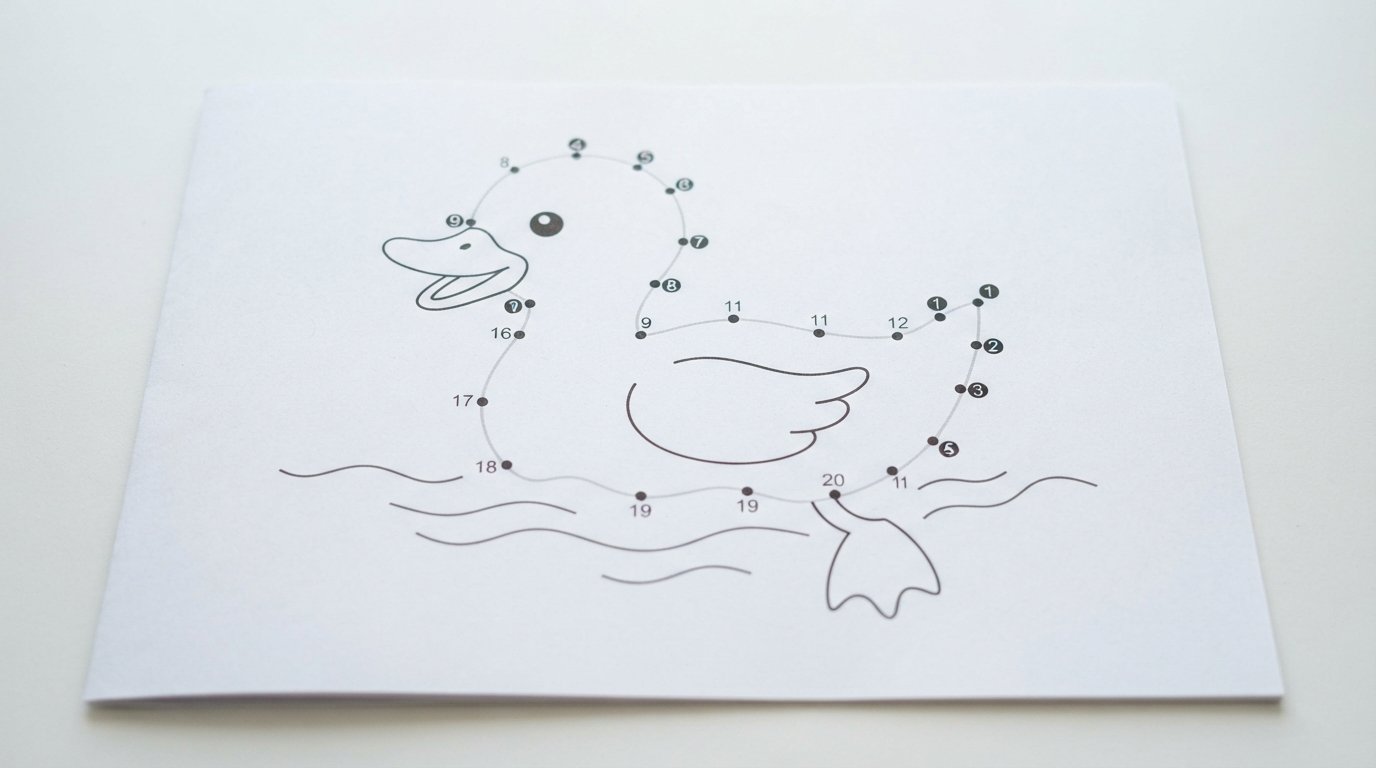

Connect-the-dots activities are a simple way to make coloring time more interactive. Instead of giving a child a picture that is already complete, the page starts with numbered or lettered dots. The child connects them in order and gradually discovers the animal hidden underneath.
Connect the dots animal coloring pages combine this discovery activity with coloring, making them useful for quiet time, preschool activities, classroom stations, or a rainy afternoon at home.
A child might connect a series of dots and suddenly see a cute puppy, dinosaur, butterfly, elephant, fish, or lion appear. Once the outline is complete, they can color it however they like.
The best part is that these activities don’t need to feel like formal learning. Children can practice following sequences, controlling a pencil or crayon, and recognizing simple numbers while having fun with an animal picture.
What Are Connect-the-Dots Animal Coloring Pages?
A connect-the-dots worksheet contains a collection of points arranged to form an image. Each point usually has a number, letter, or other simple identifier.
The child follows the sequence:
1 → 2 → 3 → 4 → 5 → 6
As more dots are connected, the outline of an animal begins to appear.
After finishing the outline, the child can color the picture.
For younger children, the dots should be large and clearly spaced. Older preschoolers can work with more dots and slightly more detailed pictures.
Why Kids Enjoy Animal Connect-the-Dots Activities
There is an element of surprise in these worksheets.
At the beginning, the page may look like a random collection of dots. The child doesn’t necessarily know what the finished picture will be.
As they connect the dots, the image slowly takes shape.
For example, a worksheet might start with:
1, 2, 3, 4, 5…
After several connections, the child realizes:
“It’s a turtle!”
That small discovery can make the activity more engaging than simply coloring a finished outline.
Start With Familiar Animals
When introducing connect-the-dots activities, familiar animals are a good place to start.
Some easy choices include:
- Dog
- Cat
- Fish
- Bird
- Rabbit
- Turtle
- Elephant
- Lion
- Monkey
- Butterfly
- Frog
- Duck
- Horse
- Bear
- Dinosaur
The picture doesn’t need to be anatomically detailed. A simple cartoon-style outline is often easier for young children to recognize and color.
Numbered Connect-the-Dots for Beginners
For children who are beginning to recognize numbers, use a small sequence.
A beginner worksheet might have only 10–20 dots.
For example:
1 → 2 → 3 → 4 → 5
and so on.
The child can practice identifying the next number while moving the pencil from one dot to another.
Don’t worry if the lines aren’t perfectly straight.
The activity is about following the sequence and completing the picture, not producing technically perfect lines.
Letter Connect-the-Dots Activities
Numbers aren’t the only way to create a connect-the-dots worksheet.
You can also use letters.
For example:
A → B → C → D → E
This can be useful for children who are practicing the alphabet.
A simple animal outline could be hidden behind the sequence, turning alphabet recognition into a visual game.
For younger children, however, numbered dots may be easier if they are already comfortable counting.
Animal-Themed Learning Ideas
The animal picture gives you opportunities to continue the activity after the dots are connected.
Suppose your child completes a lion.
You could ask:
- What animal is this?
- What sound does a lion make?
- What color would you like to use?
- Where do lions live?
- Can you draw some grass around it?
The worksheet becomes a starting point for a short conversation.
There is no need to turn every page into a lesson.
A few simple questions can be enough.
Connect the Dots, Then Color
The basic activity can be divided into two stages.
Stage 1: Connect
The child follows the numbers or letters and draws lines between the dots.
Stage 2: Color
Once the animal outline is complete, the child fills it with colors.
For example, after completing a fish, they might choose:
- Blue
- Green
- Orange
- Yellow
- Purple
You don’t need to insist on realistic animal colors.
If a child wants a purple elephant or a rainbow fish, that’s part of the creative activity.
Make the Dots Easy to See
A poorly designed connect-the-dots page can become frustrating very quickly.
The dots should be:
- Clearly visible
- Large enough for the intended age group
- Spaced reasonably apart
- Easy to distinguish from nearby dots
- Numbered or lettered clearly
Avoid putting numbers too close together.
For toddlers and younger preschoolers, large spacing can make it easier to understand which point comes next.
Choose the Right Difficulty
Not every connect-the-dots page needs to contain the same number of points.
You can organize worksheets by difficulty.
Beginner
Use approximately 10–20 dots.
The animal should have a very simple outline.
Good examples include:
- Fish
- Ball-shaped chick
- Simple butterfly
- Basic turtle
Intermediate
Use around 20–40 dots.
The animal can have more recognizable features.
Examples include:
- Dog
- Cat
- Rabbit
- Elephant
- Monkey
Advanced
Use more dots and additional details.
Examples might include:
- Dinosaur
- Horse
- Lion
- Detailed bird
- Jungle animal scene
The exact number of dots matters less than whether the child can comfortably follow the sequence.
Use Pencils or Crayons?
A pencil is usually easier for connecting dots because the lines are more precise.
A standard HB pencil works well for most printed worksheets.
Once the animal is complete, switch to:
- Crayons
- Colored pencils
- Washable markers
- Fine-tip markers for older children
For younger children, washable crayons or markers can be a practical choice.
If you’re using markers, placing a piece of scrap paper underneath can help protect the table from ink.
A Simple Home Activity Setup
You don’t need much equipment.
A basic setup can include:
- A printed connect-the-dots worksheet
- A pencil
- A small box of crayons
- A firm table or desk
- A folder for completed pages
I prefer using a firm surface rather than letting children complete detailed dot activities on a soft bed or couch. The pencil is easier to control when the paper stays flat.
You can also use a clipboard if you’re traveling or don’t have access to a desk.
Create an Animal Coloring Folder
If your child enjoys these activities, keep completed worksheets together.
Create a folder called:
My Animal Coloring Book
Add each completed page to it.
You can organize it into categories such as:
- Farm Animals
- Zoo Animals
- Ocean Animals
- Birds
- Insects
- Dinosaurs
- Pets
After several weeks, the folder can become a homemade animal coloring collection.
Farm Animal Connect-the-Dots Pages
Farm animals are excellent subjects for simple worksheets.
Ideas include:
- Cow
- Pig
- Chicken
- Sheep
- Horse
- Duck
- Goat
After completing the picture, encourage the child to draw a simple farm around it.
They could add:
- Grass
- Fence
- Barn
- Sun
- Clouds
- Flowers
This turns one worksheet into a larger drawing project.
Ocean Animal Connect-the-Dots Pages
For an underwater theme, use:
- Fish
- Dolphin
- Turtle
- Octopus
- Whale
- Seahorse
- Crab
- Starfish
After coloring the animal, children can add bubbles, seaweed, shells, and other simple underwater elements.
You could even place several completed pictures together to create an underwater poster.
Zoo Animal Activities
Zoo-themed worksheets can include:
- Lion
- Elephant
- Giraffe
- Monkey
- Zebra
- Panda
- Tiger
After connecting and coloring the animal, ask the child to choose where they think the animal belongs.
For example:
“Would the elephant be near water?”
“What would you put beside the giraffe?”
These questions encourage conversation while keeping the activity playful.
Dinosaur Connect-the-Dots Coloring Pages
Dinosaurs are particularly popular with many young children.
Simple dinosaur outlines can be created with numbered dots around the body, tail, legs, and head.
After completing the outline, children can color their dinosaur.
They can also give it a name.
For example:
“This is Max the Green Dinosaur.”
Then ask the child to draw trees, rocks, or clouds around Max.
This adds storytelling to the coloring activity without requiring writing.
Butterfly and Insect Pages
For a lighter activity, try:
- Butterfly
- Bee
- Ladybug
- Caterpillar
- Dragonfly
Butterflies are especially easy to turn into creative coloring projects because children can use symmetrical or completely different patterns on each wing.
You could ask:
“Can you make both wings match?”
Or:
“Can you give each wing a different pattern?”
Add Simple Counting Practice
Numbered connect-the-dots worksheets naturally provide an opportunity to practice counting.
While completing a page, you can ask:
“What number comes after 7?”
Or:
“How many dots did we connect?”
For younger children, don’t turn this into a test. If they don’t know the next number, simply tell them and continue.
The activity should remain enjoyable.
Try a “Guess the Animal” Game
You can make the discovery part more exciting.
Before the child begins, don’t tell them which animal is hidden.
Ask:
“What do you think this will become?”
Let them make a guess.
After connecting several dots, ask again.
Sometimes the child will recognize the animal before the outline is finished.
That’s part of the fun.
Use Animal Sounds After Coloring
Once the animal is complete, add a quick sound game.
For example:
Cow: “Moo!”
Dog: “Woof!”
Cat: “Meow!”
Duck: “Quack!”
Lion: “Roar!”
This works particularly well with younger children who enjoy copying sounds.
Create a Small Daily Routine
If you want to use these worksheets regularly, one page per day can be enough.
A simple routine could look like this:
5 minutes: Connect the dots.
5–10 minutes: Color the animal.
2–5 minutes: Talk about the animal or make its sound.
The activity doesn’t need to last an hour.
Short sessions can make it easier to stop while the child is still enjoying the activity.
Seasonal Animal Connect-the-Dots
You can also change the animal themes throughout the year.
Spring
Try:
- Birds
- Butterflies
- Rabbits
- Chicks
Summer
Try:
- Fish
- Dolphins
- Turtles
- Crabs
Autumn
Try:
- Owls
- Squirrels
- Bears
- Hedgehogs
Winter
Try:
- Penguins
- Polar bears
- Seals
- Reindeer
This gives children a reason to try new pages without changing the basic activity.
Turn Finished Pages Into Cards
Some completed animal pictures can become homemade cards.
After coloring a dog, for example, fold a piece of cardstock and attach or redraw the finished picture on the front.
Add a simple message such as:
“Have a Great Day!”
The child gets a second creative activity from the original worksheet.
Printing Tips
Before printing a large collection of connect-the-dots worksheets, check one page first.
Make sure:
- The dots are easy to see.
- Numbers are readable.
- The lines aren’t already printed between the dots.
- The animal outline is not too complicated.
- There is enough space around the picture.
- The page isn’t cropped by the printer.
A standard A4 or Letter-size sheet is generally convenient for home printing.
If your printer offers a “fit to page” option, check the preview before printing.
Don’t Expect Perfect Lines
A child may connect:
4 → 6 → 5
instead of following the correct order.
They may draw a line too far or accidentally connect the wrong dot.
That’s normal during early practice.
Rather than erasing the entire page, point to the next number and gently redirect:
“Let’s find number 5.”
This keeps the activity positive.
Safety and Supervision
For very young children, choose age-appropriate coloring materials and supervise the activity.
Small stationery items can present a choking risk for young children, so avoid giving toddlers loose small objects that aren’t appropriate for their age.
Use washable, child-appropriate crayons or markers where possible, and keep permanent markers and other unsuitable supplies out of reach.
Frequently Asked Questions
What age are connect-the-dots animal pages suitable for?
Simple pages can work well for preschool-aged children, while older children can use more detailed designs. Toddlers may need adult assistance, especially when following numbered sequences.
Are connect-the-dots worksheets educational?
They can provide practice with following sequences, number or letter recognition, pencil control, and visual attention. They are best viewed as one playful activity rather than a complete learning program.
Should children use pencils or crayons?
A pencil is usually better for connecting the dots because it allows more precise lines. Crayons, colored pencils, or washable markers can then be used for coloring.
How many dots should a beginner worksheet have?
There is no fixed number. A simple picture with around 10–20 clearly spaced dots can be a reasonable starting point for a beginner, while more experienced children can handle longer sequences.
Can I use alphabet letters instead of numbers?
Yes. Letter-based connect-the-dots pages can combine the activity with alphabet practice. Keep the sequence simple and choose letters the child is already beginning to recognize.
What if my child cannot connect the dots independently?
Help them locate the next number or letter. You can point to it and let the child draw the line. Gradually reduce your assistance as they become more comfortable.
Final Thoughts
Connect the dots animal coloring pages offer a nice combination of discovery, simple sequencing, drawing, and coloring. The child doesn’t just receive a finished animal picture—they get to reveal it themselves.
Start with familiar animals and simple dot sequences. Give children a comfortable surface, a pencil for connecting, and crayons for the final coloring stage. Most importantly, don’t worry about perfectly straight lines or staying completely inside every outline.
Whether you’re working with a cute puppy, colorful butterfly, ocean turtle, farm animal, or friendly dinosaur, the finished page can become more than just another worksheet. It can be the beginning of a small conversation, drawing project, counting activity, or homemade coloring collection.