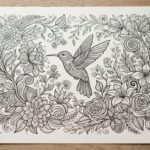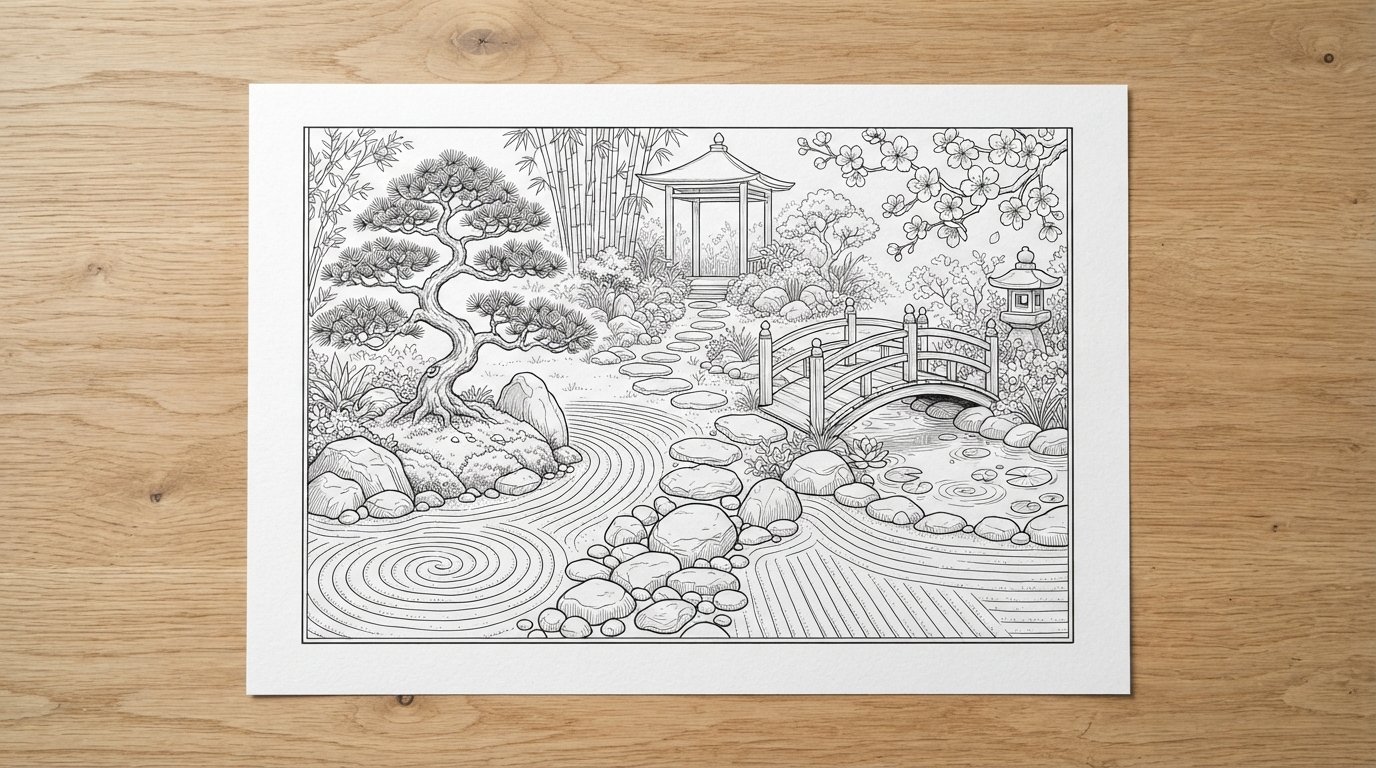

A quiet garden, a few smooth stones, carefully placed plants, and simple flowing lines can create a surprisingly enjoyable coloring experience. Zen garden coloring sheets bring those elements onto paper and give you something peaceful to work on without requiring advanced drawing skills.
For adults and older teens, these pages can be a pleasant way to step away from phones, computers, and other daily distractions. You can spend ten minutes coloring a small section or slowly work through a detailed garden scene over several days.
The idea isn’t to create perfect artwork. It’s to enjoy a slower creative activity and decide how you want your garden to look.
What Makes a Zen Garden Coloring Sheet Different?
Zen-inspired coloring pages often use simple natural elements rather than busy cartoon characters or highly complicated illustrations.
You may see:
- Smooth stones
- Raked sand patterns
- Bamboo
- Small trees
- Water features
- Bridges
- Lanterns
- Shrubs
- Flowers
- Stepping stones
- Garden paths
- Wooden structures
- Gentle waves and curved lines
The designs can be minimal or highly detailed.
A simple page may take only a few minutes, while an intricate garden scene can become a longer coloring project.
Why Zen Garden Designs Work Well for Coloring
A good coloring page gives you a defined space to concentrate on.
Zen garden illustrations often contain repeating patterns and natural shapes, which makes them easy to approach one section at a time.
For example, you might begin with the stones.
Then move to the sand.
After that, you can color the plants and finish with the smaller decorative details.
There is no need to think about the entire picture at once.
That can make the activity feel less overwhelming than starting with a completely blank piece of paper.
Use Coloring as a Mindful Activity
Mindfulness is often associated with paying attention to the present moment. Coloring can be used as one simple way to practice that kind of attention, although it isn’t a treatment for stress or mental health conditions.
Instead of trying to multitask, focus on what you’re doing.
Notice:
- The movement of the pencil
- The shape of each section
- The pressure you’re applying
- The color appearing on the paper
- The repeating patterns in the design
If your attention moves elsewhere, simply return to the page.
You don’t need to force yourself to clear your mind.
Start With the Garden’s Main Elements
A Zen garden page can contain many different objects.
Rather than choosing colors randomly for everything, start by identifying the main elements.
For example:
Sand: Beige, cream, light gray
Stones: Gray, brown, soft blue
Plants: Different shades of green
Wood: Brown
Water: Blue or blue-gray
Once these basic colors are in place, you can add small accents.
This creates a natural-looking starting point without requiring a complicated color plan.
You Don’t Have to Use Traditional Colors
Zen-inspired doesn’t mean every page needs to look realistic.
A garden can be artistic rather than photographic.
Try purple flowers, blue stones, golden leaves, or even a monochromatic design.
You could also create a completely neutral page using:
- Gray
- Beige
- Brown
- Black
- White
The simplicity can produce a very different aesthetic from a brightly colored page.
Try a Neutral Color Palette
Neutral colors can work particularly well with minimalist garden designs.
A simple palette might include:
- Warm beige
- Light brown
- Gray
- Olive green
- Soft blue
Use the lighter colors for large areas and darker colors for outlines, shadows, and small details.
This approach can make a busy illustration feel visually calmer.
Create a Japanese-Inspired Garden Palette
If you want a more traditional nature-inspired appearance, look at common garden elements for inspiration.
Try:
- Deep green leaves
- Light green moss
- Gray stones
- Brown wood
- Soft blue water
- Muted red or orange accents
You don’t need to reproduce a specific real garden. The goal is simply to create a palette inspired by natural outdoor spaces.
Color the Sand Patterns Carefully
One of the most recognizable elements of a Zen garden illustration is the patterned sand.
The page might show curved lines surrounding rocks or plants.
You don’t need to color every individual line.
Instead, lightly shade the larger sand area.
Then use a slightly darker pencil to emphasize certain sections.
Keeping the lines visible can make the raked pattern stand out.
For a minimalist result, leaving some areas completely white can also work.
Give Stones Their Own Character
Smooth garden stones can be surprisingly fun to color.
Start with light gray.
Then add darker gray along one edge.
You can also introduce subtle colors such as:
- Brown
- Blue-gray
- Green-gray
- Warm beige
Avoid making every stone identical.
Using slightly different shades can make the garden feel more natural.
Add Depth to Plants and Bamboo
Plants don’t need to be a single shade of green.
Try using two or three greens.
For example:
Light green: New leaves
Medium green: Main foliage
Dark green: Shadows and deeper sections
With colored pencils, apply the lighter shade first and gradually build darker areas.
This is especially useful when coloring bamboo, shrubs, or trees with overlapping leaves.
Don’t Rush the Small Details
A detailed Zen garden can contain tiny leaves, stones, patterns, and decorative objects.
You don’t have to color these areas first.
Work from large areas toward small ones.
This simple approach can make the page easier to manage.
A practical order is:
- Large background areas
- Sand
- Water
- Large stones
- Trees and plants
- Structures
- Small decorative details
If you get tired, stop after any stage.
Colored Pencils Are a Good Starting Point
For Zen garden coloring sheets, colored pencils are particularly versatile.
They allow you to create soft shades without covering the page too heavily.
You can also sharpen them for small leaves and decorative lines.
A basic set of 12 or 24 colors is enough for most garden designs.
If you prefer stronger colors, fine-tip markers can also work. Just test them on your paper first because some markers can bleed through ordinary printer paper.
Try a Monochrome Garden
For something different, choose one color family.
For example, use only shades of blue.
Light blue can represent sand.
Medium blue can be used for plants.
Dark blue can define stones and shadows.
You could also try an entirely green garden.
Monochrome coloring can be a useful exercise if choosing from dozens of colors feels distracting.
Make a Morning Coloring Routine
You don’t have to wait until you’re tired or stressed to color.
A short morning session can be a pleasant way to begin the day.
Keep a printed page near your desk.
After breakfast, spend 10 minutes coloring one small section.
You don’t need to complete anything.
The goal is simply to start the day with a quiet creative activity before getting caught up in messages and notifications.
Or Use It as an Evening Wind-Down
An evening coloring routine can work just as well.
Put your phone aside, make a comfortable workspace, and choose a page that isn’t excessively complicated.
Spend 15–30 minutes coloring.
If you enjoy listening to something while coloring, choose calm music, an audiobook, or quiet ambient sounds.
Keep the activity comfortable rather than treating it like a task that must be completed.
Build a Simple Mindfulness Coloring Corner
You don’t need a special room.
A small desk or table is enough.
Keep the following items together:
- Zen garden coloring sheets
- Colored pencils
- Pencil sharpener
- Eraser
- Fine-tip markers
- Blank paper
- Folder for finished pages
Keeping everything together means you can start coloring without spending several minutes looking for supplies.
A window-side table can be particularly pleasant during daylight hours.
How to Print Zen Garden Coloring Sheets
Printing these designs at home is simple.
1. Open the Printable
Open the PDF or image on your computer or mobile device.
2. Check the Preview
Make sure the entire garden illustration is visible.
Pay special attention to the corners and outer borders.
3. Choose Your Paper
Regular printer paper is fine for colored pencils.
For markers, choose thicker paper if your printer supports it.
4. Print One Copy
Print one test sheet before making multiple copies.
Check whether the lines are sharp and whether the design is the right size.
5. Start With Your Palette
Choose a few colors before you begin.
You can always add more later.
Turn Coloring Into a Five-Senses Exercise
If you want to make the session more mindful, pay attention to your surroundings.
For a few minutes, notice:
Sight: The shapes and colors on the page.
Touch: The texture of the paper and pencil.
Sound: The movement of the pencil or background sounds.
Smell: Your surroundings, tea, coffee, or fresh air.
Breathing: Notice your natural breathing without trying to control it.
This isn’t about forcing yourself to relax. It simply gives your attention somewhere concrete to go.
Try a “One Section at a Time” Rule
Detailed garden pages can look intimidating when you first print them.
Instead of looking at the whole page, cover most of it with another sheet of paper.
Leave only one section visible.
Color that area.
Then move the paper and reveal the next section.
This small trick can make a large illustration feel much more manageable.
Create Different Versions of the Same Garden
If you really like a particular design, print it several times.
Create one natural version.
Create another using pastels.
Try a third version with only cool colors.
You can then compare how the same drawing changes depending on the palette.
This is also a good way to practice without worrying about making mistakes on your only copy.
Keep Your Finished Pages
Don’t immediately throw away completed coloring sheets.
Place them in a folder or binder.
You can organize them by:
- Garden scenes
- Nature patterns
- Color experiments
- Seasonal designs
- Favorite pages
Write the date on the back if you want to keep track of your coloring sessions.
After a while, you’ll have a personal collection that shows your changing preferences.
Coloring Doesn’t Have to Be Perfect
A mindful coloring session can become less enjoyable if you constantly worry about mistakes.
A line doesn’t have to be perfectly filled.
Two flowers don’t have to match.
A stone can be a completely unexpected color.
If you accidentally go outside a line, keep working.
The finished page doesn’t need to meet anyone else’s standard.
Your goal is to enjoy creating it.
Zen Garden Coloring for Couples, Friends, or Family
Although the activity is often associated with individual relaxation, you can also color together.
Print identical garden designs and give everyone their own copy.
Don’t compare who finished first.
Instead, look at how different color choices change the same illustration.
It can be a quiet activity during a weekend afternoon or a screen-free evening at home.
Frequently Asked Questions
What are Zen garden coloring sheets?
They are printable coloring pages inspired by elements commonly associated with peaceful garden scenes, such as stones, sand patterns, plants, water, paths, and simple structures.
Are Zen garden coloring pages only for adults?
No. Simpler designs can work for older children and teenagers too. Highly detailed pages are generally more suitable for people who enjoy small coloring sections.
Can coloring help with mindfulness?
Coloring can provide an opportunity to focus attention on a simple activity. It may be used as part of a personal mindfulness routine, but it should not be considered a medical treatment.
What colors work best for Zen garden pages?
Natural greens, grays, browns, beige, blue, and muted colors are easy choices. However, there are no mandatory colors.
Are colored pencils better than markers?
Colored pencils offer more control and are useful for soft shading. Markers create stronger colors but may bleed through thin paper.
How long should a coloring session last?
There is no fixed duration. Ten to twenty minutes is enough for a short activity, while detailed pages can be completed over multiple sessions.
A Simple 15-Minute Zen Coloring Session
If you want to try the idea without committing to a long session, use this routine:
Minutes 1–2: Choose a page and three or four colors.
Minutes 3–6: Color the large background or sand areas.
Minutes 7–11: Work on stones, plants, or water.
Minutes 12–15: Add a few small details.
Then stop.
You can save the rest of the page for another day.
There is no need to finish the illustration every time you sit down.
Final Thoughts
Aesthetic Zen garden coloring sheets combine natural scenery with a simple creative activity. The repeating garden elements, curved sand patterns, stones, plants, and quiet landscapes give you plenty of details to explore without requiring you to draw the scene yourself.
You can use realistic colors, soft pastels, a monochrome palette, or whatever combination feels interesting.
Start with one page and a few colored pencils. Find a comfortable spot, put distractions aside for a little while, and work through the design at your own pace.
The finished picture is only part of the experience. The time spent slowly choosing colors and filling each section can make coloring a pleasant screen-free addition to your routine.