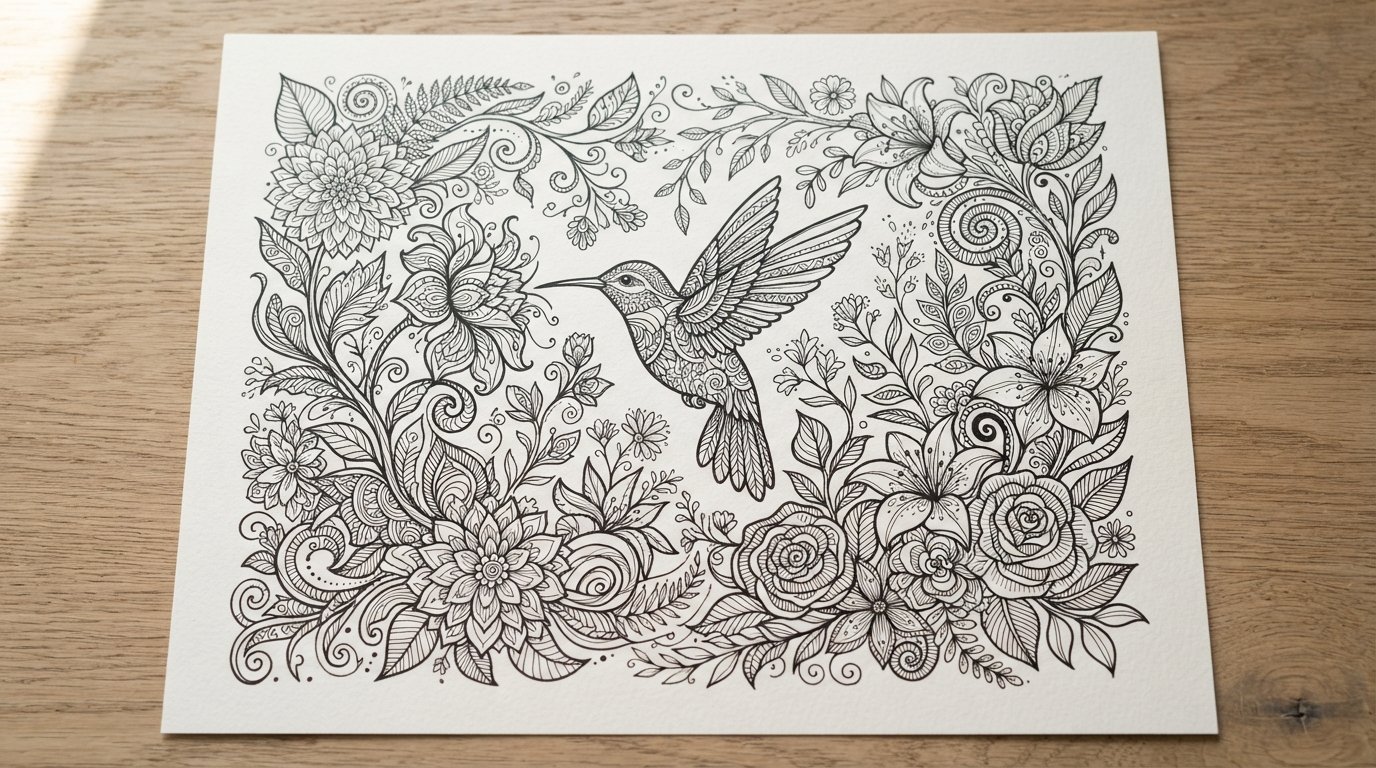

There is something naturally enjoyable about coloring flowers, leaves, vines, trees, and other nature-inspired designs. Unlike a blank sheet of paper, an adult coloring page gives you a finished outline to work with. You only have to decide how you want it to look.
Relaxing floral and nature patterns can be especially appealing when you want a quiet activity after work, during a weekend afternoon, or while taking a break from screens. You can use colored pencils, markers, or even a combination of both.
The best part is that you don’t need to consider yourself an artist. A flower outline doesn’t need to look botanically accurate, and leaves don’t have to be green. You can experiment with colors and create something that reflects your own style.
Why Adults Enjoy Floral Coloring Pages
Floral designs provide a nice balance between structure and creativity.
The outlines tell you where to color, while the large variety of flowers and leaves gives you plenty of choices.
A typical floral coloring page might include:
- Roses
- Sunflowers
- Daisies
- Tulips
- Wildflowers
- Leaves
- Branches
- Vines
- Small berries
- Butterflies
- Garden scenes
- Decorative flower borders
Some pages are simple enough to finish in one sitting, while highly detailed designs can become longer projects.
That flexibility makes them useful for different moods and schedules.
Start With Flowers You Recognize
When trying floral coloring for the first time, recognizable flowers can be easier to work with than highly abstract designs.
Take a rose, for example.
You could use several shades of pink, a traditional red, soft purple, or even an unusual blue. The familiar shape gives you a starting point while the color remains completely up to you.
The same applies to sunflowers.
You can use yellow petals with a brown center, or create an entirely different color scheme.
There is no requirement to reproduce the exact appearance of a real flower.
Nature Patterns Give You More Than Flowers
Floral coloring doesn’t have to mean coloring a page filled with flowers.
Nature-themed adult coloring pages can include entire scenes.
You might find illustrations featuring:
- Forests
- Mountains
- Birds
- Butterflies
- Mushrooms
- Garden paths
- Trees
- Wild grasses
- Leaves
- Small animals
- Lakes and rivers
- Seasonal landscapes
These pages can be particularly enjoyable when you want more variety than repeating floral patterns.
Pick Your Coloring Style
Before you start, think about the type of result you want.
You could create a realistic-looking page with natural colors, or use completely imaginative colors.
Natural Style
For a natural appearance, try combinations such as:
- Green leaves
- Yellow flowers
- Brown branches
- Blue sky
- Gray rocks
This works well for landscape and garden scenes.
Soft Pastel Style
For a gentler appearance, use lighter versions of:
- Pink
- Lavender
- Blue
- Green
- Yellow
Apply light pressure with colored pencils instead of pressing hard.
Bold Botanical Style
If you prefer stronger colors, use deep greens, oranges, reds, blues, and purples.
Bold colors can make individual flowers stand out clearly against the rest of the page.
Fantasy Nature Style
You can also forget about realistic colors completely.
Try purple leaves, turquoise flowers, orange trees, or a rainbow garden.
The page is yours.
Colored Pencils Work Particularly Well
Colored pencils are a practical choice for detailed adult coloring pages because you can control how much color you apply.
Start with light pressure and build the color gradually.
This gives you more flexibility if you decide that an area needs to be darker.
You can also sharpen the pencil for tiny leaf veins or flower details.
A basic 12- or 24-color set is enough to experiment with this technique.
You don’t need a professional artist collection to enjoy printable coloring pages.
Try Layering Two Colors
Layering is one of the easiest ways to make a flat coloring area look more interesting.
Suppose you’re coloring a leaf.
Start with light green.
Then gently add a darker green along one side.
You can blend the colors by applying the lighter shade over the transition.
For flowers, you might use a light pink base and add a darker pink near the center.
This simple technique can create depth without requiring advanced drawing skills.
Use a Different Color for the Background
The background can completely change the appearance of a floral coloring page.
If the flowers are mostly warm colors, try a cool background.
For example:
Flowers: Pink, orange, and yellow
Leaves: Green
Background: Light blue
Alternatively, leave the background white and let the flowers remain the main focus.
For detailed pages, a plain background can sometimes make the finished design look cleaner.
Don’t Forget Small Nature Details
The small details are often what make nature coloring pages enjoyable.
Look closely at the illustration and you’ll often find:
- Leaf veins
- Flower centers
- Tiny petals
- Grass blades
- Small branches
- Seeds
- Berries
- Butterfly wings
- Decorative dots
You don’t have to finish these details immediately.
Work on the larger sections first and return to the small areas later.
A Simple Way to Choose Colors
If you regularly spend too much time deciding which color to use next, limit your choices.
Choose five colors before you begin.
For example:
- Dark green
- Light green
- Yellow
- Orange
- Brown
Use only those five colors throughout the page.
This creates a consistent look and removes the need to make a new decision for every flower.
Another option is to choose one main color and use several related shades.
Seasonal Floral Coloring Ideas
Nature gives you an easy source of color inspiration throughout the year.
Spring
Try:
- Soft pink
- Fresh green
- Yellow
- Lavender
- Light blue
Summer
Use:
- Bright yellow
- Orange
- Strong green
- Blue
- Pink
Autumn
Consider:
- Brown
- Orange
- Red
- Golden yellow
- Dark green
Winter
For winter nature scenes, experiment with:
- Blue
- Gray
- White
- Dark green
- Purple
Seasonal palettes are a simple way to make the same type of coloring page feel different throughout the year.
Make a Quiet Coloring Corner
You don’t need an elaborate art studio.
A small table near a window can be enough.
Keep your supplies in one container so you can begin quickly.
A practical setup could include:
- Printed floral coloring pages
- Colored pencils
- Fine-tip markers
- Pencil sharpener
- Eraser
- Blank paper
- Folder for finished artwork
If you have a desk where you normally use a computer, clear one small area for coloring.
That makes it easier to switch from digital work to a physical activity.
How to Print Floral Coloring Pages at Home
You can print coloring pages using an ordinary home printer.
Step 1: Open the Design
Open the printable PDF or image on your computer, tablet, or phone.
Step 2: Check the Print Preview
Look carefully at the edges.
Floral designs sometimes have leaves or vines extending close to the page border, so make sure the printer isn’t cutting anything off.
Step 3: Select Your Paper
Standard printer paper is suitable for colored pencils.
If you’re using markers, thicker paper can reduce bleed-through.
Step 4: Print a Test
Print one page before making several copies.
Check whether the lines are dark and clear enough for comfortable coloring.
Step 5: Print Additional Copies
If you like the design, print another copy and try a completely different color palette.
What to Do When a Page Feels Too Detailed
Some adult coloring pages contain an enormous number of tiny areas.
If you find yourself getting tired, don’t force yourself to finish.
Instead, divide the page into sections.
For example:
Day 1: Outer leaves
Day 2: Large flowers
Day 3: Small flowers
Day 4: Background details
This turns one large illustration into several shorter creative sessions.
You can also stop halfway and return to it whenever you feel like coloring again.
Try Coloring While Listening to Something
Some people enjoy pairing coloring with another low-effort activity.
You might listen to:
- Instrumental music
- An audiobook
- A podcast
- Nature sounds
If you are using headphones, keep the volume at a comfortable level.
The goal is to make coloring enjoyable rather than turn it into another productivity task.
Floral Coloring Can Be a Screen-Free Evening Activity
After spending hours looking at a laptop or phone, a paper-based hobby can provide a different kind of activity.
Place your phone somewhere out of reach and work on a floral page for a while.
You don’t need to set a strict target such as finishing one page.
Even coloring a few flowers can be enough for a short break.
Experiment With Black and White
Not every section needs bright color.
You can intentionally leave some areas white.
For example:
- Color the leaves green.
- Color the flowers purple.
- Leave tiny decorative areas white.
- Use gray for branches.
The contrast can make the finished page look cleaner.
You can also use a black or dark-gray pencil for certain details rather than filling everything with color.
Create Your Own Flower Collection
If you enjoy coloring botanical pages, keep your finished work in a folder.
Over time, you’ll have your own collection of:
- Flower studies
- Garden scenes
- Forest designs
- Seasonal pages
- Butterfly illustrations
- Leaf patterns
Write the date and color palette on the back of each page.
This small habit can make it easier to remember which combinations you enjoyed.
Turn One Design Into Multiple Experiments
You don’t have to find a new page every time.
Print the same floral design three times.
Use one copy for realistic colors.
Use the second for pastel colors.
Use the third for a bold or fantasy palette.
When you put the finished pages next to each other, you’ll see how much difference color selection can make.
This is also a good way to practice without worrying about ruining your only copy.
Coloring With Friends or Family
Adult coloring doesn’t have to be a completely individual hobby.
Give everyone the same floral design and let each person choose their own palette.
One person might create a realistic garden.
Another might use bright tropical colors.
Someone else might turn the whole page into a fantasy illustration.
There doesn’t need to be a winner.
The interesting part is seeing how different each interpretation becomes.
How to Avoid Turning Coloring Into a Chore
The easiest way to lose interest is to create unnecessary rules.
You don’t have to:
- Finish every page
- Use realistic colors
- Stay with one design
- Complete the picture in one sitting
- Use expensive supplies
- Make every section perfect
If you get bored with one design, put it away and choose another.
If you make a mistake, keep going.
Adult coloring should remain a flexible creative hobby.
Frequently Asked Questions
Are floral coloring pages suitable for beginners?
Yes. Choose designs with larger flowers and fewer tiny details if you’re starting out. You can move toward more complicated botanical patterns later.
What is the best coloring tool for detailed flowers?
Colored pencils are a good starting point because they provide precise control and allow gradual shading. Fine-tip markers are another option when you prefer stronger colors.
Can I use regular printer paper?
Yes, especially with colored pencils. If you’re using markers, thicker paper is usually more suitable because it can reduce ink bleeding.
Do flowers have to use realistic colors?
No. You can use any colors you like. Realistic palettes are simply one option.
How long should I spend coloring?
There is no required amount of time. A short 10–20 minute session can be enjoyable, while some people prefer working on one detailed illustration over several days.
Can coloring help with stress?
Coloring can be a relaxing recreational activity for some people. It should not be presented as a treatment for stress, anxiety, or other health conditions.
A 15-Minute Floral Coloring Activity
If you only have a short amount of free time, try this simple exercise.
Minutes 1–2: Choose one flower and three colors.
Minutes 3–8: Color the petals using light and dark versions of one color.
Minutes 9–12: Add color to the leaves and stem.
Minutes 13–15: Add a few small details or shading.
Stop there.
You don’t need to finish the entire page for the activity to feel complete.
Final Thoughts
Relaxing floral and nature patterns offer a simple creative activity for adults who enjoy flowers, gardens, landscapes, and detailed illustrations.
You can keep your coloring realistic or use completely unexpected colors. You can spend ten minutes on a few petals or several evenings completing a complicated garden scene.
Start with a design that matches your patience level, gather a few affordable coloring supplies, and experiment with different palettes.
The finished artwork is a nice bonus. The real enjoyment comes from choosing colors, filling each section, and giving yourself some quiet time to create something with your hands.